
A simple maintenance check on your wood stove’s flue can increase its perceived heat output by nearly double. Yet, most homeowners focus on adding more logs, believing the problem lies within the firebox itself. The most powerful lever for a warmer home is often the one that’s completely overlooked, hiding just above the flames. Understanding this secret will not only slash your wood consumption but transform your entire approach to home heating.
Why your wood heating feels weaker than it should
You have a modern stove with a high efficiency rating, yet the room stays stubbornly chilly. Before blaming the appliance, consider where that precious energy is escaping. An inefficient fire is often losing its power through the home’s breathing passage, long before the heat ever reaches you.
Sarah Jenkins, 42, a graphic designer from Aspen, recalls her frustration. “I was burning through a cord of wood so fast, and for what? A lukewarm living room. I thought my stove was failing, but the real issue was in the chimney’s artery, completely clogged with soot.” Her experience highlights a common problem where the root cause is invisible.
Three main culprits consistently sabotage your fire’s performance. The first is using damp wood, which wastes energy boiling off moisture. The second is poor airflow management, which can suffocate the flames. But the most significant and dangerous issue is a dirty exhaust channel, which directly impacts safety and heat output.
The hidden energy cost of a neglected conduit
A modern wood stove can achieve efficiency ratings of 70% to 80%, a stark contrast to the mere 15% of an open fireplace. In theory, this is a recipe for major energy savings. But that potential plummets the moment the draft in your flue weakens. A significant portion of your fire’s energy then goes straight up this essential conduit instead of into your home.
This vertical lung is designed to carry smoke and byproducts away safely while helping to pull oxygen into the fire. When its walls become coated in soot and creosote, its diameter shrinks, and this critical function is impaired. The fire struggles to breathe, combustion becomes incomplete, and your heating system’s heart starts to fail.
The one maintenance trick that unlocks your stove’s full power
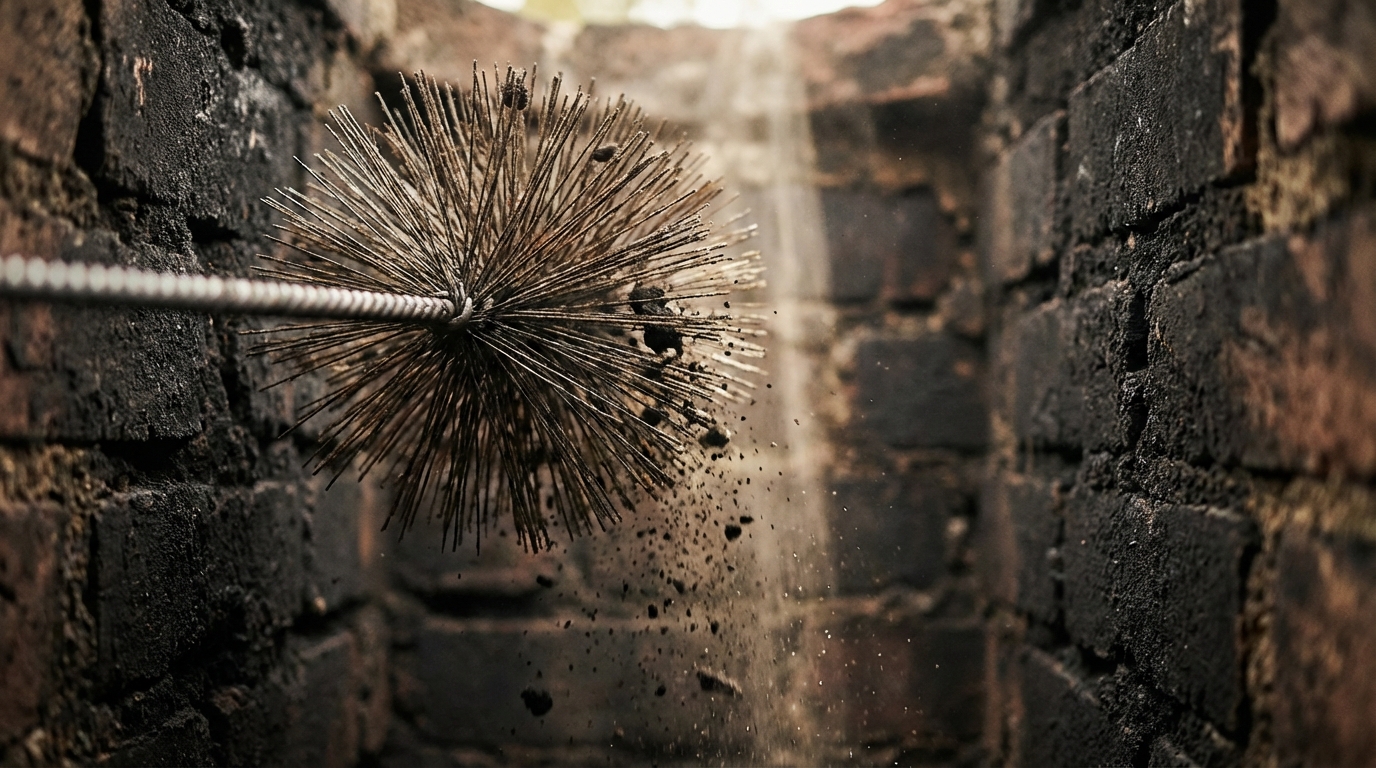
The single most effective action you can take is ensuring your stove’s flue is impeccably clean. It’s a simple concept with a massive impact. Over time, soot and creosote build up on the inner walls of the passageway, creating an insulating layer that prevents heat from radiating properly and restricts airflow.
Professionals estimate that just one millimeter of soot buildup can force you to burn up to 10% more wood for the same amount of heat. A clean flue allows smoke to exit efficiently, improves the fire’s draft, and lets the system operate at peak performance. This simple act can feel like you’ve almost doubled your stove’s heating power, all while using less fuel.
More than just heat: a matter of safety
Beyond efficiency, maintaining the fire’s exhaust pipe is a critical safety measure. The sticky, tar-like substance that builds up, known as creosote, is highly flammable. A thick accumulation is the primary cause of dangerous chimney fires. A clean flue is your best defense against such a disaster.
Furthermore, a blocked smoke’s escape route can lead to smoke and carbon monoxide spilling back into your home. This odorless, colorless gas is toxic, making regular cleaning of this crucial channel not just an efficiency tip but a health necessity. The annual mechanical sweep by a certified professional is non-negotiable for insurance and safety.
How to spot a flue that needs attention
Your heating system will give you clear signals when the unseen engine of your fire is struggling. Ignoring these signs means burning more wood for less comfort and increasing safety risks. Learning to recognize them is key to maintaining an efficient hearth.
Here are the primary indicators that your ventilation system is compromised:
| Symptom | Underlying Cause |
|---|---|
| Strong soot smell in the room | Creosote deposits are off-gassing, or a poor draft is causing minor spillage. |
| Smoke spilling from the stove door | The flue is too restricted for the smoke to escape quickly enough. |
| The stove takes much longer to heat up | A poor draft means the fire isn’t getting enough oxygen to burn hot. |
| Increased wood consumption | You’re burning more fuel to compensate for poor combustion and heat transfer. |
How to maximize the effect for ultimate winter comfort
Keeping the chimney’s core clean is the foundation, but two other elements complete the trifecta of heating efficiency. Combining a clean flue with high-quality fuel and smart fire management will transform your wood stove into a true powerhouse of warmth.
This integrated approach ensures that every log you burn releases its maximum energy potential directly into your living space. It turns heating from a chore into a science, giving you full control over your comfort and consumption. The pathway for warmth must be clear for these other tips to work.
It all starts with perfectly seasoned fuel
The quality of your wood is paramount. Burning “green” or wet wood is incredibly inefficient. A significant portion of the fire’s energy is wasted turning water into steam instead of producing heat. The goal is to use wood with a moisture content below 20%.
For every 10% of additional moisture, you can lose about 25% of the wood’s heating value and dramatically accelerate soot buildup in your flue. Opt for dense hardwoods like oak, beech, or maple that have been properly split and stored in a ventilated shelter for at least two years. The system’s throat will thank you for it.
Mastering the art of a clean and efficient burn
How you build and manage your fire makes a huge difference. Avoid starting with a massive, roaring blaze, which creates excess smoke. Instead, build the temperature up gradually to establish a strong draft in the column of air.
Never overload the firebox; this restricts airflow and leads to smoldering, incomplete combustion that clogs the thermal highway faster. Always reload fresh logs onto a thick bed of hot embers, not a dying flame. Proper use of your stove’s air controls is essential for regulating the burn rate and maximizing heat from this essential conduit.
The secret to a truly powerful and economical wood stove doesn’t lie in buying more logs but in unlocking the hidden potential of what you already have. By focusing on maintaining a clean flue, you ensure the heart of your heating system can perform its job without obstruction. It’s the single most impactful gesture for a warmer, safer, and more efficient home.
To truly transform your heating experience, remember these core principles. First, prioritize an annual professional cleaning of your chimney liner and perform interim maintenance as needed. Second, complement this clean passageway with dry, seasoned hardwood and intelligent fire management. These actions work together to create a synergistic effect.
With this knowledge, you can finally stop feeding a hungry fire that gives little in return. Are you ready to unleash the true power of your hearth and enjoy a cozier winter with less work and worry?
How often should i really clean my flue?
For regular users, an annual cleaning by a certified professional is the minimum requirement for safety and insurance. If you use your wood stove as a primary heat source, a second cleaning per season is highly recommended to maintain peak efficiency.
Are chimney cleaning logs enough?
No, cleaning logs are a helpful supplement but not a replacement for mechanical sweeping. They contain a chemical catalyst that helps dry out and loosen some of the creosote, making it easier to remove, but they cannot physically scrape the flue clean like a professional brush can.
What’s the difference between a chimney and a flue?
The chimney is the entire structure you see on the outside of the house. The flue is the liner or passageway inside the chimney that contains and directs smoke and gases from the fireplace or stove safely to the outdoors.
Why does smoke come back into the room when i open my stove door?
This is called backdrafting and it’s a major sign of a blocked or poorly functioning flue. The blockage prevents smoke from rising properly, so it seeks the easiest escape route, which is back into your room. It indicates an immediate need for inspection and cleaning.