
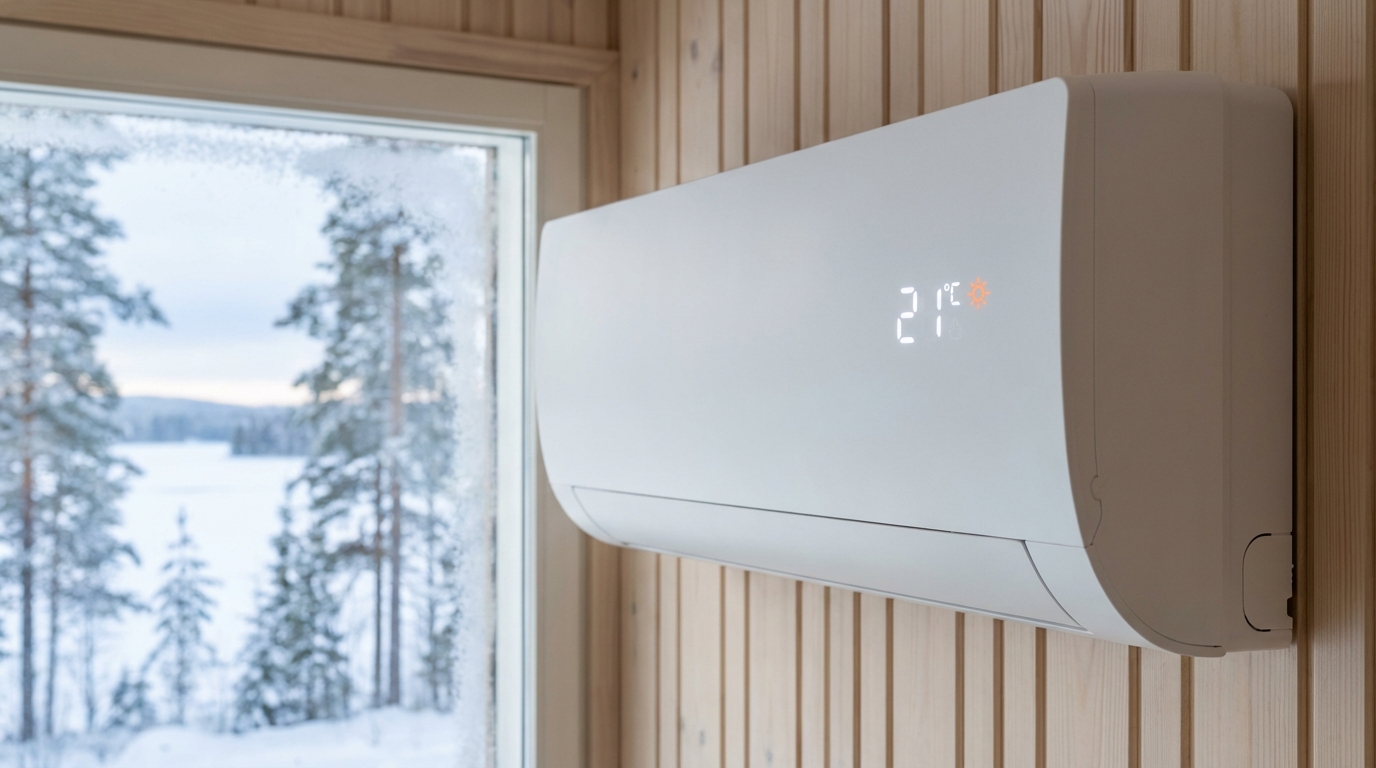
In many modern finnish homes, the comforting warmth on a freezing january day comes from a surprising source that costs a fraction of traditional heating. The secret isn’t a complex boiler or expensive solar panels; it’s an everyday object many people already own but only think to use in summer. This simple shift in perspective is quietly rewriting the rules of winter survival. How can a device designed for cooling possibly become the heart of warmth in one of europe’s coldest countries? The answer lies in using it completely backwards.
How finns stay warm in winter without a single radiator
Stepping into a contemporary finnish home during winter is an exercise in quiet surprise. There are no clanking pipes or hissing radiators. The warmth is simply present, an even, comfortable blanket of air. Your eyes might search for the source, eventually landing on a sleek, white wall-mounted unit that looks exactly like a high-end air conditioner.
Mika L., 42, an it consultant from tampere, shares his experience. “we installed this climate chameleon last year, and our electricity bill dropped by a third. the living room finally feels evenly warm, without the old radiator’s hot and cold spots.” he was initially skeptical that a single device could handle the harsh winter, but this clever heating system has proven its worth.
This is the finnish trick: they use air-source heat pumps as their primary heaters. This air-source technology is now installed in hundreds of thousands of homes across the country. In many new builds, a central radiator system is completely absent, replaced by one or two of these efficient thermal units.
The core idea is astonishingly simple. A heat pump isn’t magic; it’s just an air conditioner running in reverse. Instead of pumping heat out of your home to cool it, this reverse refrigerator pulls residual warmth from the outside air and moves it inside. Even when the temperature drops to minus ten degrees celsius, there’s still thermal energy in the air, and a heat pump is designed to capture it.
The simple physics behind this heating revolution
The true genius of the heat pump lies in its efficiency. Because it moves existing heat rather than creating it from scratch by burning fuel or using electric resistance, it operates on a different level. For every one unit of electricity it consumes, it can deliver around three units of heat into your home.
A traditional electric radiator gives you a one-to-one deal, which can become incredibly expensive over a long winter. This clever climate control device, however, leverages the outdoor air as a free and renewable energy source. It acts as a thermal siphon, continuously drawing warmth into your living space.
This method also transforms the feeling of comfort. Radiators often create a cycle of blasting heat followed by a cooling period, leading to noticeable temperature swings. A heat pump provides a much gentler, stable warmth. The fan circulates the air, eliminating cold spots and turning the entire room into a cosy cocoon. The absence of bulky metal boxes on the walls also frees up space, making smaller rooms feel more open.
Turning your “summer ac” into a serious winter heater
The most revolutionary part of this trend is that you might already possess this technology. If you have a split ac unit, check the remote control. Look for a small sun icon or a “heat” mode hidden among the usual settings. Many modern systems are reversible ac units, capable of both cooling and heating.
In finland, families switch their device to heating mode in october and often don’t touch it again until spring. They choose a stable temperature, like 20 or 21°c, and let this central brain for heating manage the climate automatically. It becomes the heart of the home’s warmth, maintaining comfort with minimal fuss.
Success depends on a few simple habits. Proper placement of the indoor unit is key; installing it in a central area like a living room or at the top of a staircase allows the warm air to circulate naturally throughout the home. Regular maintenance, like cleaning the filters every few weeks, is also crucial for keeping the energy-efficient heater running at peak performance.
What this finnish “no radiator” idea means for your home
You don’t need to live in a log cabin to adopt this smarter approach to heating. Many homes in temperate climates across europe and north america are already equipped with a reversible heat pump, marketed simply as an “air conditioner.” Unlocking its winter potential is as easy as pressing a button.
Finns also embrace a layered heating strategy. The heat pump acts as the primary, low-cost base heater. On the coldest nights of the year, they might supplement it with a small boost from a fireplace or underfloor heating in the bathroom. This pragmatic approach ensures comfort without relying on expensive systems all winter long.
By creating a single temperature landscape rather than a house of hot and cold zones, this method improves more than just your energy bill. Stable indoor temperatures and better air circulation can help reduce issues with dampness and mould. The home feels more unified and consistently comfortable.
Ultimately, the finnish method is about using what you already have, but more intelligently. That overlooked box on your wall, the one you associate with sweltering summer days, holds the potential to be a small, practical superpower against the winter cold. This cooling and heating solution is a game-changer.
Comparing heating methods: the finnish way vs tradition
Understanding the fundamental differences in approach can highlight why the finnish model is gaining so much traction. It’s a shift from generating heat to simply moving it, a concept that has profound implications for both cost and comfort.
| Feature | Traditional radiator system (electric/gas) | Finnish method (air-source heat pump) |
|---|---|---|
| Energy efficiency | Creates heat with a 1:1 energy-to-heat ratio. | Moves heat, delivering 2-4 units of heat per unit of electricity. |
| Operating cost | Higher, as it relies on consuming fuel or electricity directly. | Significantly lower due to high efficiency, cutting bills by a third or more. |
| Comfort level | Can create hot and cold spots with temperature swings. | Provides stable, evenly circulated warmth for a consistent feel. |
| Primary function | Solely dedicated to heating. | Dual function: provides both cooling in summer and heating in winter. |
Can a heat pump really work in very cold weather like finland?
Modern air-source heat pumps are designed for low temperatures and can efficiently extract heat from the air well below 0°c. In finland, many systems provide reliable heating even at -20°c, though some homeowners use a small backup source for the most extreme nights of the year.
Is using an ac in heating mode more expensive than radiators?
In almost all cases, it’s significantly cheaper. Because a heat pump moves heat instead of creating it, it typically delivers 2 to 3 times more heat per kilowatt-hour than a standard electric radiator. This translates directly into lower monthly energy bills.
Will my existing ac unit be enough to heat my whole house?
It depends on the power of your unit and the layout of your home. Many finns use one or two main units to heat the primary living areas, allowing warm air to circulate. They might rely on smaller, secondary heaters for distant rooms like bathrooms or bedrooms that naturally stay cooler.
Is it bad for the machine to run in heating mode all winter?
Not at all. Heat pumps installed in nordic countries are built for continuous seasonal use. As long as you perform simple maintenance like cleaning the filters regularly, the machine is designed to run efficiently for many years in either heating or cooling mode.
What about the noise compared to traditional heating?
The indoor unit produces a gentle fan sound, usually quieter than a microwave or a kitchen extractor fan. Many people report that they stop noticing the sound after a day or two, especially since it replaces the banging pipes or rushing water sounds common with older radiator systems.