
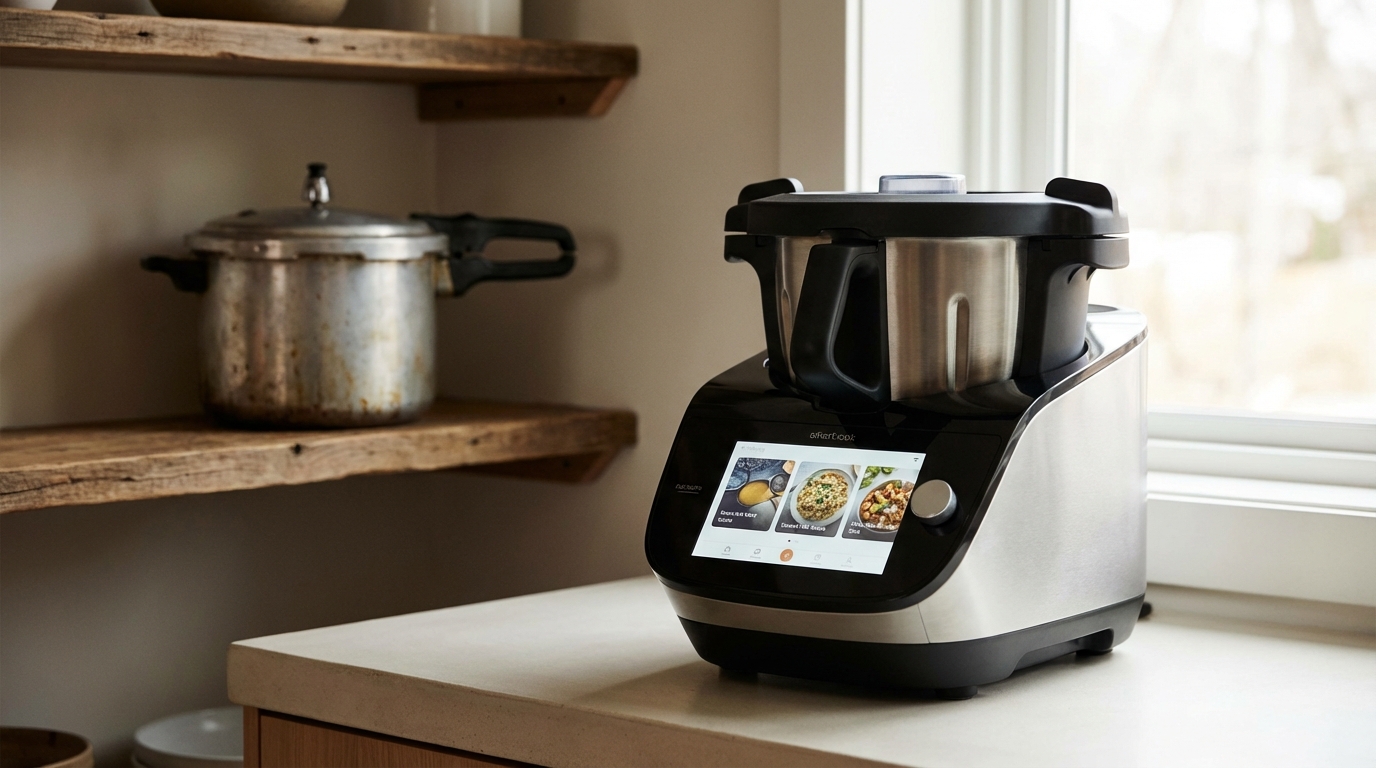
The hissing, rattling pressure cooker, once the heart of a busy kitchen, is quietly being moved to the back of the cupboard. Surveys show that while ownership remains high, daily use is plummeting as a new appliance takes its place. It’s not because families have stopped loving home-cooked meals, but because they’re tired of the high-attention drama that comes with traditional cooking. The real shift isn’t about technology; it’s an emotional trade-off for something far more valuable than time. What are families gaining that makes them abandon a tool trusted for generations? Let’s explore the quiet revolution happening on countertops everywhere.
From hissing fear to quiet confidence in the kitchen
Walk into any family kitchen on a weekday evening and you’ll feel it: a low-grade tension woven from hunger, homework, and fatigue. The classic pressure cooker was meant to be a shortcut through that chaos, but it brought its own brand of stress with its sharp hiss of steam and a constant, low-level risk. This culinary ballet often felt more like a hazard than a help.
Sarah Jenkins, 38, a graphic designer from Manchester, captures this feeling perfectly. “The old pressure cooker felt like borrowing power from something a bit dangerous. My mother used it, but I was always terrified of it.” For Sarah, the process of preparing a meal was fraught with anxiety, especially with children running around. The new device feels more like a calm colleague that just gets on with the job.
The new promise of safety and silence
The new generation of smart cookers enters this scene with the opposite energy. There is no shrieking valve, no guesswork about how many whistles equal perfectly cooked lentils. Instead, a simple screen and a few buttons offer a clear promise: “Beef stew – ready in 32 minutes.” This change in the cooking experience transforms the entire evening’s choreography.
This is a fundamental shift in how we approach the art of the meal. The old method demanded active vigilance; you stayed near the stove, listening for cues, ready to adjust the heat. The new devices sell an entirely different promise: let us worry about the timing and temperature, you go and live your life. This isn’t just about convenience; it’s about offloading mental stress.
A generational divide in culinary creation
In a small Lyon household spanning three generations, this contrast is on full display. The grandmother keeps her heavy aluminum pressure cooker on a high shelf, a cherished heirloom. She still remembers the day a failed gasket sent soup splattering across the ceiling. Her daughter, a busy professional, relies on a smart pot for her daily food preparation.
She can scroll to “chickpea curry,” add the ingredients, and press start. This gastronomic craft is now automated, allowing her to answer emails and tend to her children while the machine handles the temperature adjustments. The cooking process unfolds safely in the background, a far cry from the hands-on approach of the past.
How families are really using smart cookers
The reality of using these devices rarely matches the glossy lifestyle videos. Real kitchens are messy and unpredictable. Those who truly embrace their smart cooker treat it less like a futuristic gadget and more like a reliable, if slightly clumsy, kitchen assistant. The goal is to simplify the daily culinary marathon, not to reinvent it.
One of the most effective strategies is creating a “default dinner” list. This involves programming three or four go-to recipes: a simple chili, a lentil soup, a basic pasta sauce. When fatigue sets in, there’s no need to scroll through endless options. You just choose a default, toss in the ingredients, and let the machine handle the cooking.
Mastering the machine without the stress
This simple ritual effectively eliminates the evening panic. It also provides a safe way for older children to get involved in preparing nourishment, teaching them to use secure buttons instead of an open flame. On a fragile weekday, automating this part of the cooking feels like reclaiming precious time and energy.
Of course, there are common mistakes. Many new users have stories of overflowing soup from filling past the max line or pasta welded to the bottom due to a wrong setting. These initial failures can be frustrating, but they are part of the learning curve in this new style of cookery. The key is to see it as a partnership, not a battle of wills with an appliance.
Practical tips for everyday success
To turn an intimidating metal box into a trusted part of your family’s routine, a few habits make all the difference. Start with simple dishes like soups, rice, and stews before attempting more complex recipes. Always respect the fill line, and use a trusted source for recipes until you understand your specific model. This approach to cooking builds confidence over time.
| Feature | Traditional pressure cooker | Smart multi-cooker |
|---|---|---|
| Safety | Requires manual monitoring and user experience | Multiple sensors, auto shut-off, guided programs |
| Operation | Manual heat adjustment based on sound and steam | “Set and forget” digital programs |
| Learning curve | Steep; relies on passed-down knowledge | Intuitive interface and app-guided recipes |
| Benefit | Speed and deep flavor infusion | Safety, convenience, and reduced mental load |
The quiet cultural shift behind ‘set and forget’ dinners
The move away from classic pressure cookers is also a story about sensory memory. For many, the soundtrack of home includes that nostalgic hiss and rattle from the kitchen, a sign that a comforting meal was underway. The new smart pots are silent, less theatrical. This transformation of the cooking soundscape is something some people genuinely miss.
Yet, for families prioritizing safety and simplicity, it’s a trade they willingly make. The value of an appliance that doesn’t startle the dog or wake a sleeping baby often outweighs the charm of a whistling lid. In modern life, comfort is increasingly defined by silence and calm, not by spectacle. This dance of ingredients is now a quieter performance.
Democratizing the kitchen
There’s also an invisible social story here. For decades, the expert of the pressure cooker was typically the person who had the time to master its quirks—often women managing the household. Automating this culinary knowledge into presets and programs helps distribute the responsibility of cooking more evenly. A partner who never learned the old ways can now follow on-screen prompts.
This can be seen as a loss of a specific craft, but it’s also a significant gain in sharing the domestic load. The art of preparing a meal becomes more accessible to everyone in the home, regardless of their prior experience. It flattens the learning curve required for successful cooking.
Buying back peace of mind
On a deeper level, these machines tap into the same desire that drives smart thermostats and robot vacuums: the fantasy that tedious tasks can manage themselves. We know it isn’t magic; someone still has to chop the onions and wash the pot. Yet the feeling of having one major task removed from your mental checklist is incredibly powerful.
That small relief can be the difference between a stressful evening and a peaceful one. The old pressure cooker will always hold a place in nostalgia and holiday feasts. But every time a family chooses a silent, sensor-packed pot, they are voting for a different kind of kitchen—one that is less about risk and more about quiet kindness. This new era of cooking is about nourishing the family and the cook’s peace of mind simultaneously.
Are smart cookers really safer than old pressure cookers?
Most modern smart cookers include multiple safety valves, temperature sensors, and automatic shut-off features, which greatly lower the risk of classic over-pressure accidents when they are used correctly.
Can a smart cooker fully replace a traditional pressure cooker?
For most everyday meals like soups, stews, rice, and beans, a smart cooker is an excellent replacement. However, some niche, high-pressure, or very large-batch recipes may still achieve better results in a specialized stovetop model.
Do smart cookers change the taste of traditional recipes?
The fundamental physics of pressure cooking remain the same, so flavors are very similar. You might need to make small adjustments to liquid amounts, salt, and timing to perfectly match the taste of cherished family recipes.
Is a smart cooker worth it if I only cook a few times a week?
Many occasional cooks find immense value in a smart cooker precisely because it lowers the risk of failure. On nights when you’re tired and out of practice, it provides a reliable way to get a good meal on the table.
What should I look for when buying my first smart cooker?
Prioritize a device with a clear and simple interface, strong safety reviews from other users, a size that fits your household’s needs, and access to a recipe ecosystem or app that you find easy and enjoyable to use.